Donetsk
Grey BeesDonetsk is a political and geographic reference point in the novel’s portrayal of the war in eastern Ukraine. It appears both as the center of a separatist-aligned identity invoked by Pashka and as a distant landmark in the landscape around Little Starhorodivka, connecting local routines to a conflict whose front line and grey zone extend across the region.
Regional Setting and Conflict
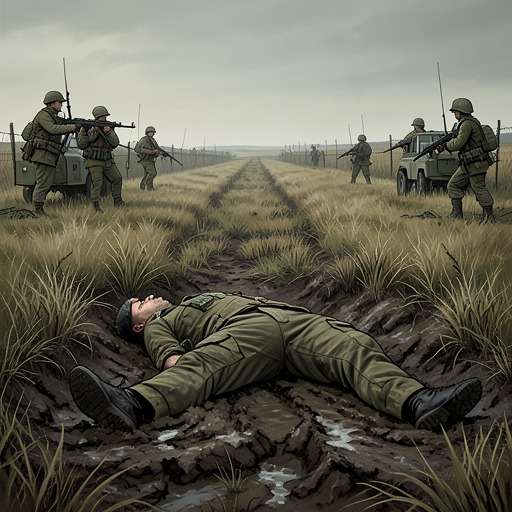
The foreword places Donetsk among the eastern cities where Russia sent officers, volunteers, and activists in 2014 to foment anti-Kyiv revolts. The ensuing war divided the region between Ukrainian forces and pro-Russian separatists in the breakaway Donetsk and Luhansk republics. The front line runs for about 450 kilometres, while the grey zone between the sides varies in width from hundreds of metres to several kilometres. Donetsk therefore belongs to a conflict geography that is not confined to the city: its effects reach villages where residents endure shelling, displacement, and the collapse of ordinary services.
The foreword describes the grey zone as a place most residents left, while a small number remained among abandoned homes and shuttered shops, post offices, and police stations. Their daily conduct is shaped by the need to survive among armed forces on both sides. In this larger map, Donetsk is one of the named centers of the conflict, while the novel’s close attention falls on people living in its less visible margins.
Donetsk in the Landscape of Little Starhorodivka
From Sergeyich’s garden in Little Starhorodivka, Pashka’s garden lies on the side nearer to Donetsk. The village’s two surviving residents thus occupy different positions within a landscape oriented toward opposing forces: Sergeyich’s garden faces toward Sloviansk, while Ukrainian army trenches are dug into a rise near Zhdanivka; beyond Pashka’s street and gardens, local fighters and Russian military personnel occupy dugouts. Donetsk is not shown as a place Sergeyich visits in these passages, but as a directional and political presence organizing the surrounding terrain.
Pashka makes that political association explicit when he asks Sergeyich whether he would do something if “our boys” asked. Pressed to clarify, Pashka identifies those boys as being in Donetsk. Sergeyich refuses the implied allegiance, saying that his boys are in his shed—his bees—and that Pashka is not one of his. The exchange sets partisan affiliation against Sergeyich’s deliberately narrow responsibility for his apiary, while exposing how the city’s name can stand for a claim of political belonging.
Displacement, Trade, and Unresolved Loss
Donetsk’s significance is also part of the novel’s wider account of how the conflict unsettles movement and everyday exchange. Sergeyich leaves Little Starhorodivka with his beehives, treating honey as a durable form of value and carrying it into a precarious wartime economy. In another village, he trades honey for food; later, a shopkeeper gives him credit worth 560 hryvnias, and his honey eventually brings in cash. These episodes show how people sustain themselves through local transactions as familiar markets and routines are disrupted. Donetsk is one pole of the region’s political division, but the narrative’s material detail follows the means of survival available far from the city.
The consequences of the conflict also reach Crimean Tatar families connected to the wider region. Sergeyich learns that Akhtem has been missing for twenty months after armed men took him and two others on their way to the mosque in Bakhchysarai. Later, an official inadvertently calls Akhtem’s wife a widow, then retracts the implication and says the case remains open and outside his office’s authority. When Akhtem’s body is found buried in the woods, Aisylu thanks Sergeyich for going to Simferopol, saying that without his intervention Akhtem would not have been returned. These events do not take place in Donetsk, but they extend the novel’s portrait of political violence and uncertainty across the region associated with the city.
Narrative Significance
Donetsk functions less as a developed urban setting than as a name that gives the surrounding war a political center. It appears in the foreword’s account of the conflict, in the orientation of village gardens and military positions, and in Pashka’s language of allegiance. Against that scale, the novel places Sergeyich’s bees, neighborly quarrels, and exchanges of honey for food. The contrast makes the city’s importance palpable without shifting attention away from people whose lives unfold in the conflict’s quieter, less visible spaces.